
Registry Is Not Jail Release
California Megan's Law is the public state sex-offender registry. It can show a public post-release status for people subject to California registration and public-disclosure rules. It does not list all Santa Clara County released inmates. It does not confirm that a person was released from Main Jail, Elmwood, CDCR, BOP, or ICE. It should be used only when the offense category, court record, or known registration issue makes the registry relevant.
The release record still comes from the agency that held or supervised the person. Santa Clara County jail release information comes from Administrative Booking, the Sheriff's records process, VINE, and the Superior Court case. State-prison custody comes from CDCR/CIRIS and CDCR records. Parole and probation statuses come from DAPO or county Probation. Megan's Law answers a different question: whether a qualifying person has public registry information.
| Question | Use |
|---|---|
| Was the person released from county jail? | Administrative Booking and court records |
| Is there a public registry status? | California Megan's Law |
| Was the person in CDCR custody? | CDCR/CIRIS |
| Is the person on parole or probation? | DAPO or Santa Clara County Probation |
| Was a case sealed or restricted? | Official court order and agency response |
Search Megan's Law Status
The registry should be searched with care and narrow identifiers. Names can be similar, and public registry display is governed by registration and disclosure rules. If a person does not appear, do not conclude there was no release, no conviction, or no custody history. The person may not be subject to public registry display, may have restricted records, may have no qualifying registration duty, or may be outside the public search result.
- Confirm the court or release record suggests a registration issue before using the registry as a follow-up source.
- Open California Megan's Law.
- Search with the available name and location details, then compare identifiers shown by the registry.
- Use court records to confirm the underlying case and official disposition when public.
- Use jail, CDCR, BOP, ICE, parole, or probation records for custody and release status.
The California Megan's Law source page is shown below. It is the relevant statewide registry source, not a county jail release page.
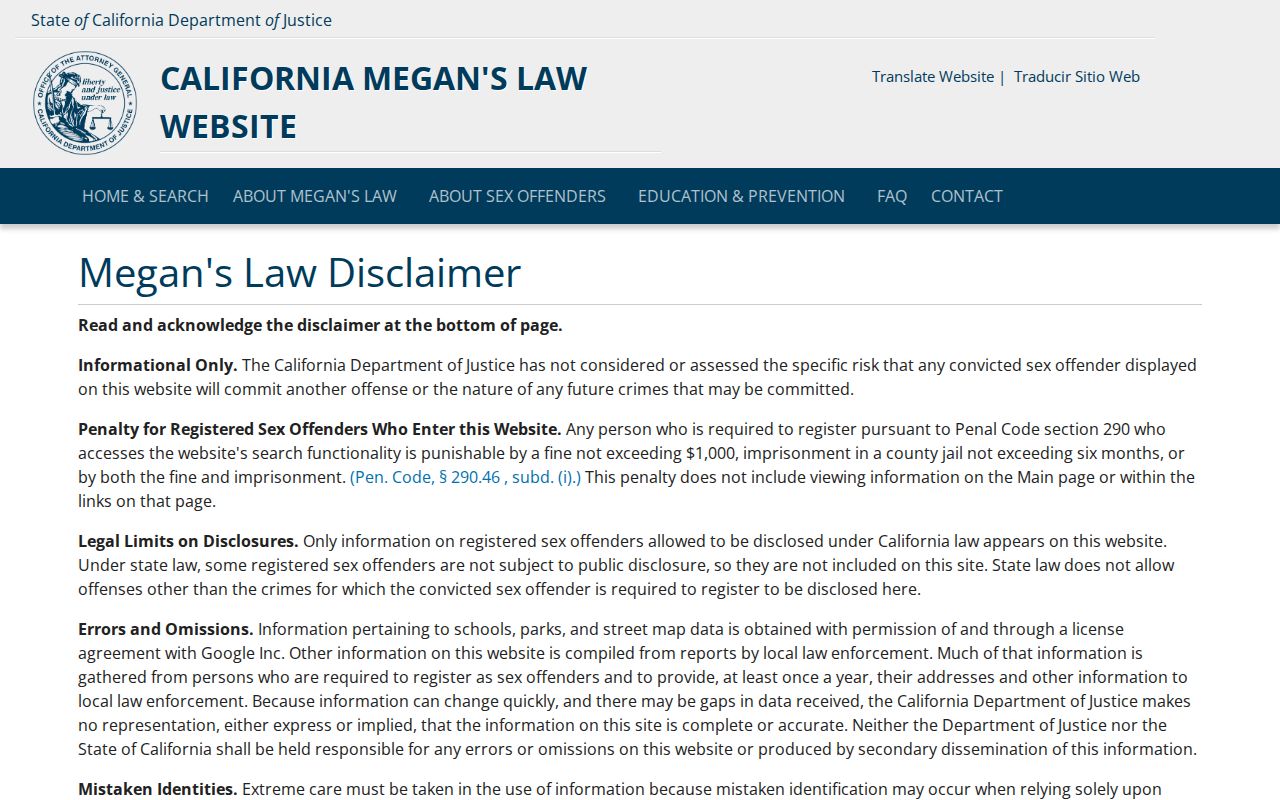
The image supports the registry route. For an official release record, use the originating custody agency or court record.
Where Registry Fits
The registry fits after the main release trail, not before it. First decide whether the person was in county jail, state prison, federal prison, or immigration custody. Then confirm the release or transfer through the correct record system. Only then use Megan's Law if a public registration question remains. This order prevents a registry search from being mistaken for a custody search.
For Santa Clara County, a court disposition is often the bridge. The court record can show conviction, dismissal, sentence, probation order, or other public case outcome. If the case record indicates a qualifying registration issue, the registry can be checked for public status. If the court file is restricted or the registry does not display the person, rely on official court and agency responses rather than unofficial assumptions.
Confirm Release Separately
Use Santa Clara County Administrative Booking when the release question is about a county jail event. Use the Sheriff's public-records request process for time and manner of release, release reason, transfer destination, or custody dates. Use the Superior Court for disposition, sentence, custody credits, probation orders, dismissal, or certified minutes. Use CDCR for state-prison custody and DAPO for parole. Use BOP for federal prison custody and ICE for immigration custody.
| Registry source | California Megan's Law, statewide public registry |
|---|---|
| County release proof | Administrative Booking and Sheriff's records request |
| Court proof | Santa Clara County Superior Court criminal case records |
| State custody proof | CDCR/CIRIS, CDCR records, DAPO when parole applies |
Registry Limits After Release
California Megan's Law is a public registry with disclosure rules, not a complete criminal-history file. It does not display every released person, every booking photo, every court document, or every supervision condition. Some court records are sealed or restricted. Juvenile, victim-identifying, medical, protected probation, and other records may be unavailable to the public. A registry result can be one public status point, but it is not a substitute for official release records.
Use purpose-neutral language when documenting a registry result. The relevant public-record purposes here are release confirmation, court/legal process, custody-status awareness, family coordination, and official records requests. Do not use third-party mirrors to override the state registry or a court order. If registry and court information appear to conflict, the official agency response and current court record should control.
Court and Registry Match
When a registry search is relevant, the court record should be used to understand the case. The Superior Court record may show disposition, sentence, probation terms, custody credits, dismissal, or other public case events. The registry may show a public post-release registration status for a qualifying person. These records answer different questions. The court explains the case; the registry displays public registration information under state rules.
If the registry and court record appear incomplete or inconsistent, do not fill the gap with third-party pages. Use the official court, DOJ registry, Sheriff's Office, CDCR, DAPO, or Probation source that owns the record. Public registry display can be affected by law, status, and data timing. A release record can be affected by custody processing, transfer, sealing, or agency retention.
When Registry Has No Result
A no-result Megan's Law search does not mean the person was never arrested, never released, never convicted, or never supervised. It may mean no public registration duty applies, the person is not publicly displayed, identifiers do not match, or the search is outside the registry's scope. The next step depends on the actual question. For release date, use custody records. For disposition, use court records. For state prison, use CDCR. For supervision, use Probation or DAPO.
The registry is one specialized source in a larger Santa Clara County release-check chain. It should be used after the custody type and court context are known, not as a substitute for them.
When a registry result does appear, treat it as current public registry information, not as a full release packet. It may help confirm that a qualifying person has a public registration status after release, but it does not show the booking number, PFN, custody dates, release time, release reason, or supervision terms. Those facts must come from the Sheriff's Office, Superior Court, CDCR, DAPO, Probation, BOP, or ICE depending on the case.
Santa Clara County release work should therefore keep the registry in its proper lane. Use it only for the public registration question, then return to the official record holder for the release question. That keeps the page accurate for people who need a custody fact rather than a registry status point.
The same caution applies when a registry entry is old or when a court record has changed. Record clearance, sealing, or other restrictions can affect public access in court and agency systems. A state registry result should be compared with current official sources before drawing a release conclusion. The registry can be a valid public status source, but it is not the final word on jail release, prison discharge, or supervision completion.
Public Record Search
Sponsored Results